
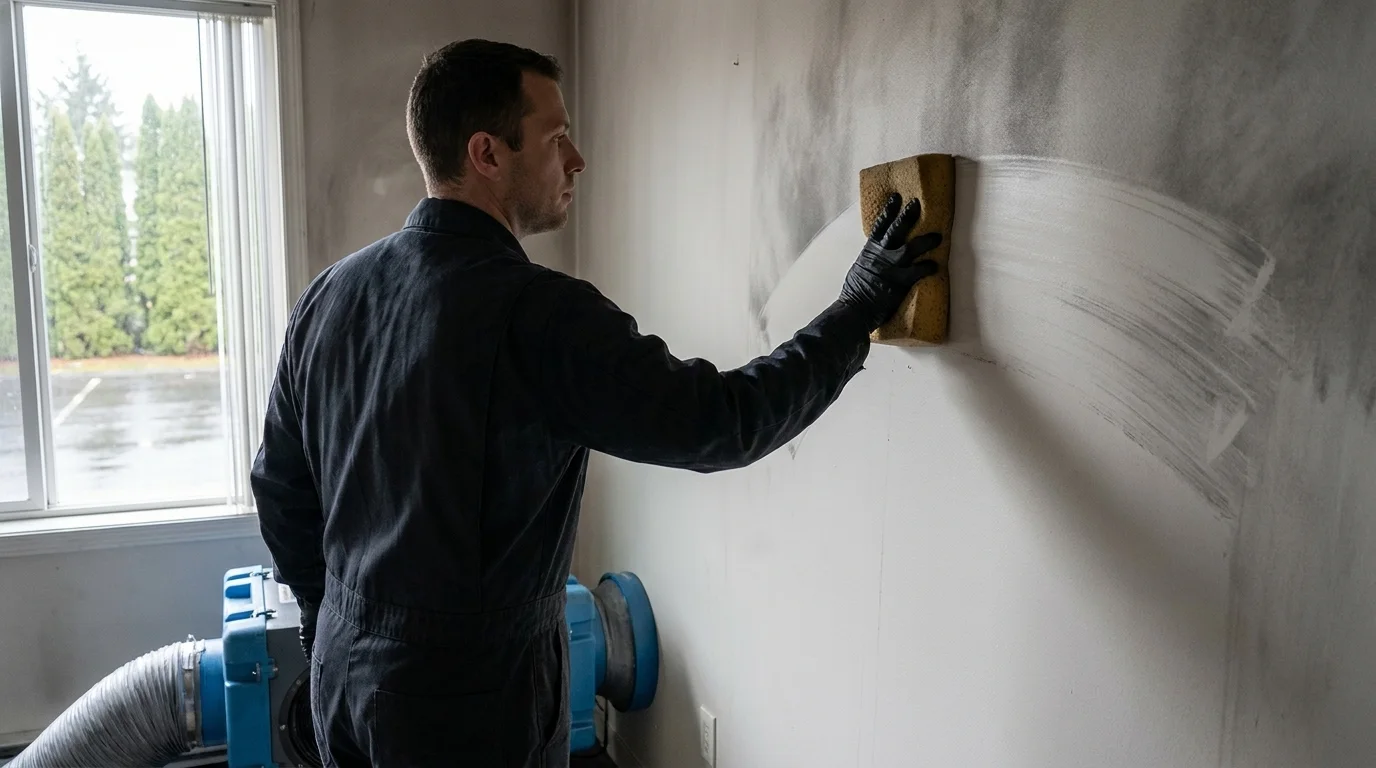
24/7 Emergency Smoke Damage Restoration in Lakewood
24/7 emergency smoke damage restoration in Lakewood and surrounding areas. IICRC-certified, insurance billing accepted. Call (253) 200-0503.
Smoke damage emergency in Lakewood? We answer 24/7. Call now and our crew heads out to stop smoke and soot damage from spreading.
Still smelling smoke weeks after the fire’s out? That’s not your imagination, and it won’t fade on its own. Smoke residue is acidic, microscopic, and it works its way into drywall pores, HVAC ductwork, and fabric fibers within hours of a fire, long before visible soot even settles. A quick wipe-down might clear the surface, but the odor molecules and acidic film underneath keep etching metal, yellowing paint, and corroding electronics for months if they’re not treated with the right chemistry. Smoke damage restoration is a different discipline than general cleanup, and getting it wrong usually means doing it twice.
What smoke damage restoration actually involves
Smoke behaves differently depending on what burned and how hot it burned. A smoldering mattress fire produces thick, oily protein soot that’s nearly invisible but smells aggressive and bonds tightly to surfaces. A fast-burning synthetic fire (furniture, plastics, electronics) leaves a dry, powdery soot that smears if you touch it wrong and spreads easily through the house on HVAC airflow. Wildfire smoke cleanup is its own category: no direct flame contact with the structure, but ash and fine particulate infiltrate through attic vents, window seals, and soffits, settling into insulation and carpet fibers.
Real smoke damage repair means identifying which type of residue you’re dealing with, because the cleaning agents and tools are not interchangeable. Technicians work room by room with HEPA vacuums, dry chemical sponges for dry soot, solvent-based cleaners for oily protein residue, and thermal foggers that recreate the heat conditions that drove the smoke odor into porous materials in the first place, so the deodorizing agent can reach the same cavities. Timelines run from a few days for a contained, single-room incident to several weeks when ductwork, insulation, and structural cavities are involved.
Our process
- Soot characterization. We identify whether residue is wet/protein, dry, or fuel/oil-based, since each requires a different cleaning agent and sequence.
- Pre-cleaning and HEPA vacuuming. Loose soot is removed first with HEPA-filtered equipment so it doesn’t grind deeper into fibers or get redistributed through the air during the next steps.
- Surface and content cleaning. Walls, trim, and salvageable contents are treated with the matched chemical process (dry sponging, wet cleaning, or solvent cleaning depending on residue type).
- Thermal fogging and odor neutralization. Fogging equipment matches the smoke’s original heat and particle size to penetrate the same materials the smoke penetrated, breaking down odor at the molecular level rather than masking it.
- Ozone or hydroxyl treatment (where needed). For stubborn odor in enclosed spaces, controlled ozone or hydroxyl generators finish what fogging and cleaning couldn’t reach, run on a monitored schedule since ozone isn’t safe for occupied spaces during treatment.
What separates a good smoke damage response from a bad one
The most common shortcut is treating the odor instead of the residue, masking a room with an aerosol deodorizer or scented fogger without removing the acidic soot film underneath. The smell returns within weeks, usually worse, because the underlying chemistry is still active. A second common miss is ignoring HVAC systems entirely. If the furnace ran during or after the fire, smoke particulate is sitting in the ductwork and will redistribute odor through the house every time the system cycles, even after every visible surface has been cleaned.
Adjusters evaluating a smoke claim generally want to see documented soot characterization (what type of residue, where it reached), a room-by-room scope with before and after readings, and evidence that HVAC and insulation were inspected, not just the visible living spaces. A written scope that separates cleanable contents from those needing replacement also matters for claim accuracy, since over-cleaning damaged items and under-cleaning salvageable ones both cost money unnecessarily.
What does smoke damage restoration cost?
Costs scale with how far the smoke traveled and how porous the affected materials are, not just the size of the fire. A contained kitchen fire with light smoke staining costs far less to remediate than a whole-house wildfire infiltration event where ash has settled into every HVAC return and closet. Every loss is different, which is why Frontline Fire & Flood provides a written scope of work with room-by-room pricing before any cleaning begins. Homeowners insurance typically covers smoke damage restoration when the loss is tied to a covered fire event, including smoke that originated elsewhere (a neighboring unit or wildfire) if your policy includes smoke damage coverage.
| Scenario | Typical range |
|---|---|
| Single room, light surface soot | $500 - $1,800 |
| Whole-room deep clean with odor treatment | $1,800 - $4,000 |
| HVAC duct cleaning and deodorization | $1,000 - $3,500 |
| Multi-room house fire, moderate smoke spread | $5,000 - $15,000 |
| Whole-house wildfire ash and odor remediation | $8,000 - $20,000+ |
Seasonal & regional considerations
Pierce County’s wildfire smoke events, typically late summer into early fall, bring a different problem than structure fires: no flame contact, but ash infiltration through attic ventilation and older window seals common in Lakewood’s mid-century housing stock. Homes built before the 1980s often have less sealed building envelopes, which means wildfire smoke works its way into wall cavities and insulation more readily than in newer, tighter construction. Winter space-heater and fireplace-related incidents are the other recurring pattern locally, usually contained to a single room but with ductwork involvement if the furnace was running at the time.
Service area
Frontline Fire & Flood handles smoke damage restoration services for homeowners and property managers throughout Lakewood and the surrounding South Puget Sound communities, including Tacoma, University Place, DuPont, and Steilacoom.
If your home still smells like smoke after a fire, that odor is a sign of active residue, not a lingering memory. Call (253) 200-0503 to begin smoke and soot removal with a documented scope your insurance adjuster can work from.
Frequently Asked Questions
Does homeowners insurance cover smoke damage restoration?
Why does my house still smell like smoke after I've cleaned the visible soot?
What's the difference between protein soot and synthetic soot?
Can wildfire smoke damage a home even if the fire never reached the property?
How long does post-fire smoke cleanup typically take?
Looking for the best smoke-damage-restoration company in Lakewood?
Frontline Fire & Flood provides licensed and insured smoke-damage-restoration in Lakewood, WA and the surrounding area, and has served local property owners since 2014. Customers rate us 4.9 out of 5 stars across 137 Google reviews. We answer calls 24/7 — call (253) 200-0503 for immediate help.
Need smoke-damage-restoration now?
We respond 24/7 across Lakewood and surrounding WA cities.
Related Coverage
- Our Restoration Services
- Contact Frontline Fire & Flood
- Restoration Services in Anderson Island
- Restoration Services in Auburn
- Restoration Services in Bonney Lake
- Restoration Services in Bremerton
- Restoration Services in Burien
- Restoration Services in Centralia
- Restoration Services in DuPont
- Restoration Services in Federal Way
- Restoration Services in Fife
- Restoration Services in Fircrest
- The Fire Damage Restoration Process, Explained