
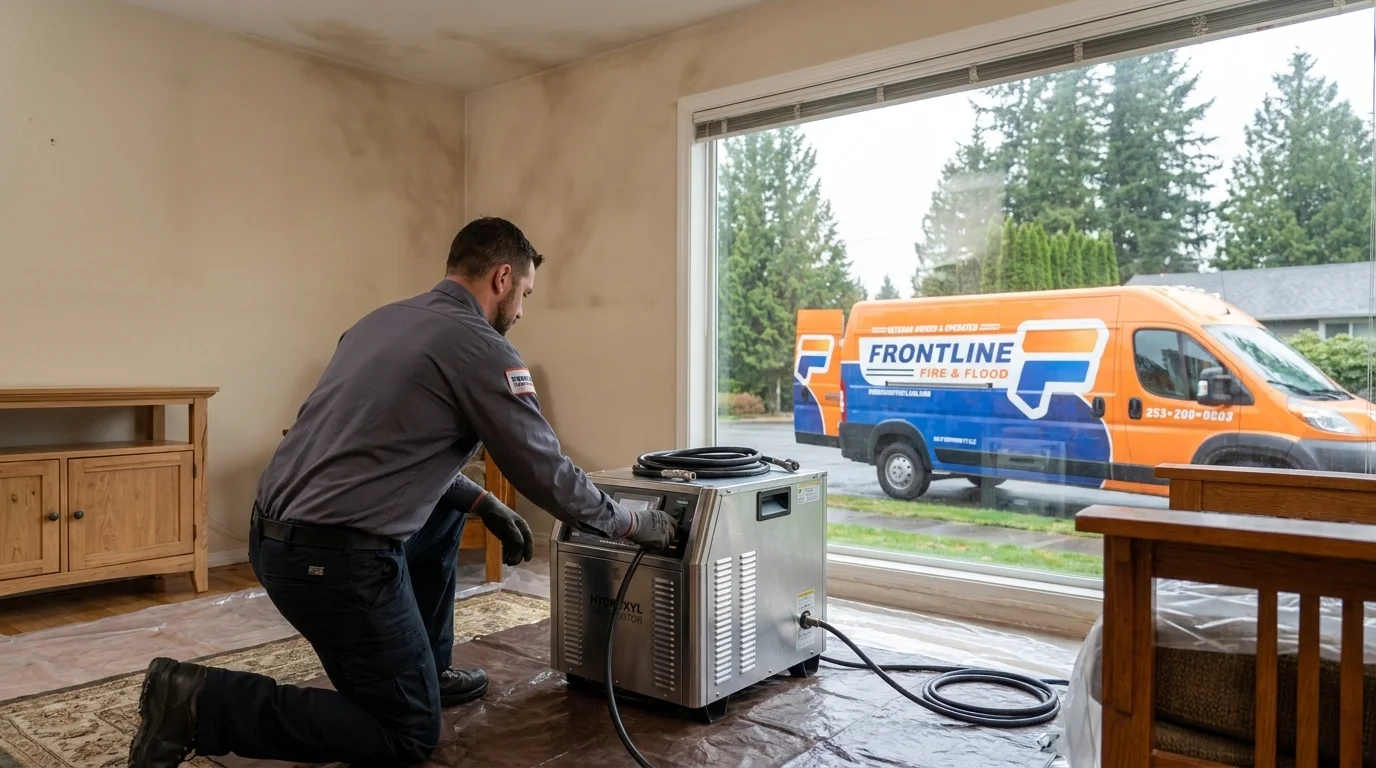
Odor Removal and Deodorization in Lakewood
24/7 odor removal and deodorization in Lakewood and surrounding areas. IICRC-certified, insurance billing accepted. Call (253) 200-0503.
A house that was cleaned after smoke damage, a basement that flooded two years ago, or a rental unit where a tenant smoked indoors for a decade all share the same frustrating trait: the smell comes back. Paint covers it for a few weeks, candles mask it for an evening, and then it returns the first humid day or the first time the heat kicks on. That’s because odor molecules from smoke, sewage, pet urine, or mold have worked into porous materials, drywall, subfloor, HVAC ductwork, and surface cleaning alone never reaches them. Odor removal and deodorization in Lakewood means tracking the smell to its actual source and treating the materials that are holding it, not just the air in the room.
What Odor Removal and Deodorization actually involves
Real deodorization starts with identifying what’s producing the smell and where it’s lodged. Smoke odor behaves differently than sewage odor, which behaves differently than the musty smell of hidden mold growth, and each requires a different chemical approach. The work typically includes source removal (pulling out contaminated insulation, charred material, or saturated subfloor that can’t be salvaged), sealing or priming surfaces that will be kept, and applying one or more deodorization technologies: thermal fogging to drive deodorizing agents into the same pores smoke penetrated, hydroxyl generators for occupied spaces where ozone isn’t safe to run, or ozone treatment in unoccupied structures for heavier odor loads. HVAC systems often need duct cleaning or filter replacement, since a system that’s been circulating smoke or mold spores will keep reintroducing odor into clean rooms. Timelines range from a single same-day treatment for a mild cooking or pet odor to several days of layered treatment and off-gassing time for fire-damaged structures or long-standing sewage intrusion.
Our process
- Source identification. We walk the property to find where the odor is actually coming from, not just where it’s strongest, checking wall cavities, subfloor, ductwork, and any porous material near the original event.
- Removal of unsalvageable material. Insulation, charred framing, saturated carpet pad, or drywall that’s absorbed the odor permanently gets removed rather than masked, since no deodorizer penetrates material as effectively as it was contaminated.
- Surface cleaning and sealing. Remaining structural surfaces are cleaned with odor-specific agents and, where needed, sealed with an odor-blocking primer before any cosmetic repair goes back on.
- Deodorization treatment. Depending on the odor type, occupancy, and severity, we apply thermal fogging, hydroxyl generation, or ozone treatment, matching the method to the material and whether people or pets need to be in the space during treatment.
- Verification. We re-check the space after treatment and after it’s had time to off-gas, since some odors read as gone immediately after treatment but reappear once humidity or temperature shifts.
What separates a good odor removal response from a bad one
The most common mistake is treating the air instead of the material. Spraying an aerosol deodorizer or running a fogger without removing the source material will mask a smell for days or weeks, and then it returns, often worse, because moisture or heat reactivates it. A second common failure is using ozone in an occupied home; ozone is effective on heavy, unoccupied odor loads but is not something people or pets should be breathing, and a responsible crew will choose hydroxyl treatment instead when the home is lived in during the work. Insurance adjusters reviewing an odor claim typically want documentation of what was removed versus treated, photos of the contaminated material, and a clear explanation of which deodorization method was used and why, since billing for ozone treatment on a space that was clearly occupied raises red flags. A thorough job also checks return air vents and duct interiors, since odor trapped in HVAC components is one of the most frequent reasons a “fixed” smell comes back within a month.
What does Odor Removal and Deodorization cost?
Cost depends heavily on the source of the odor, how long it’s been present, and how much material has to be removed versus treated in place. A mild pet odor in one room costs far less to resolve than smoke odor that’s worked through an entire house’s drywall and ductwork. These figures are typical industry ranges, not a quote; every property is different, and Frontline Fire & Flood provides a written scope of work before any treatment begins. Homeowners insurance typically covers odor removal when it’s tied to a covered peril, such as fire or a sudden plumbing failure, but it generally doesn’t cover odor from long-term issues like chronic pet odor or deferred maintenance.
| Scenario | Typical range |
|---|---|
| Single room, mild odor (cooking, minor pet) | $150 - $450 |
| Whole-house hydroxyl treatment | $800 - $2,000 |
| Smoke odor after a contained fire | $1,500 - $4,500 |
| Sewage or category 3 water odor | $1,000 - $3,500 |
| Severe fire odor requiring material removal and sealing | $3,000 - $8,000+ |
Seasonal & regional considerations
Lakewood’s damp winters and mild, humid summers both play a role in how odors behave after a loss. Moisture in the air reactivates smoke and mold odors that seemed resolved, which is why a treatment that looks successful in a dry week can fail once the Pacific Northwest’s wetter months return. Homes built before the 1980s in this area often have original ductwork and wall insulation that hold odor more stubbornly than newer construction, which is something to flag early if you’re dealing with a persistent smell in an older house.
Service area
Frontline Fire & Flood provides odor removal and deodorization throughout Lakewood and nearby communities including Tacoma, University Place, DuPont, and JBLM-area housing.
If a smell keeps coming back no matter how many times you’ve cleaned or painted, it’s worth having someone find the actual source before spending more on products that only mask it. Call to schedule an odor assessment and get a written treatment plan for your property.
Services We Handle
- Air Purification
- Cleaning and Deodorization
- Odor Control & Deodorization
- Smoke & Odor Removal
Frequently Asked Questions
Does homeowners insurance cover odor removal and deodorization?
What's the difference between ozone treatment and hydroxyl deodorization?
Will painting over smoke odor make it go away?
How long does thermal fogging treatment take?
Why does the smell come back weeks after we thought it was gone?
Looking for the best odor removal and deodorization company in Lakewood?
Frontline Fire & Flood provides licensed and insured odor removal and deodorization in Lakewood, WA and the surrounding area, and has served local property owners since 2014. Customers rate us 4.9 out of 5 stars across 137 Google reviews. We answer calls 24/7 — call (253) 200-0503 for immediate help.
Need Odor Removal and Deodorization now?
We respond 24/7 across Lakewood and surrounding WA cities.
Related Coverage
- Our Restoration Services
- Contact Frontline Fire & Flood
- Restoration Services in Anderson Island
- Restoration Services in Auburn
- Restoration Services in Bonney Lake
- Restoration Services in Bremerton
- Restoration Services in Burien
- Restoration Services in Centralia
- Restoration Services in DuPont
- Restoration Services in Federal Way
- Restoration Services in Fife
- Restoration Services in Fircrest