
Lead Paint Abatement in Lakewood
24/7 lead paint abatement in Lakewood and surrounding areas. IICRC-certified, insurance billing accepted. Call (253) 200-0503.
What Lead Paint Abatement actually involves
Most homes in and around Lakewood built before 1978 carry some lead-based paint, often buried under several later coats. The risk shows up when that paint starts to fail: chalking on old window sashes, chips collecting on a sill, dust generated by a window that sticks and scrapes every time it’s opened, or demolition work that disturbs a painted surface nobody tested first. Lead dust is the real hazard, not the paint film itself, and it’s invisible at the levels that matter.
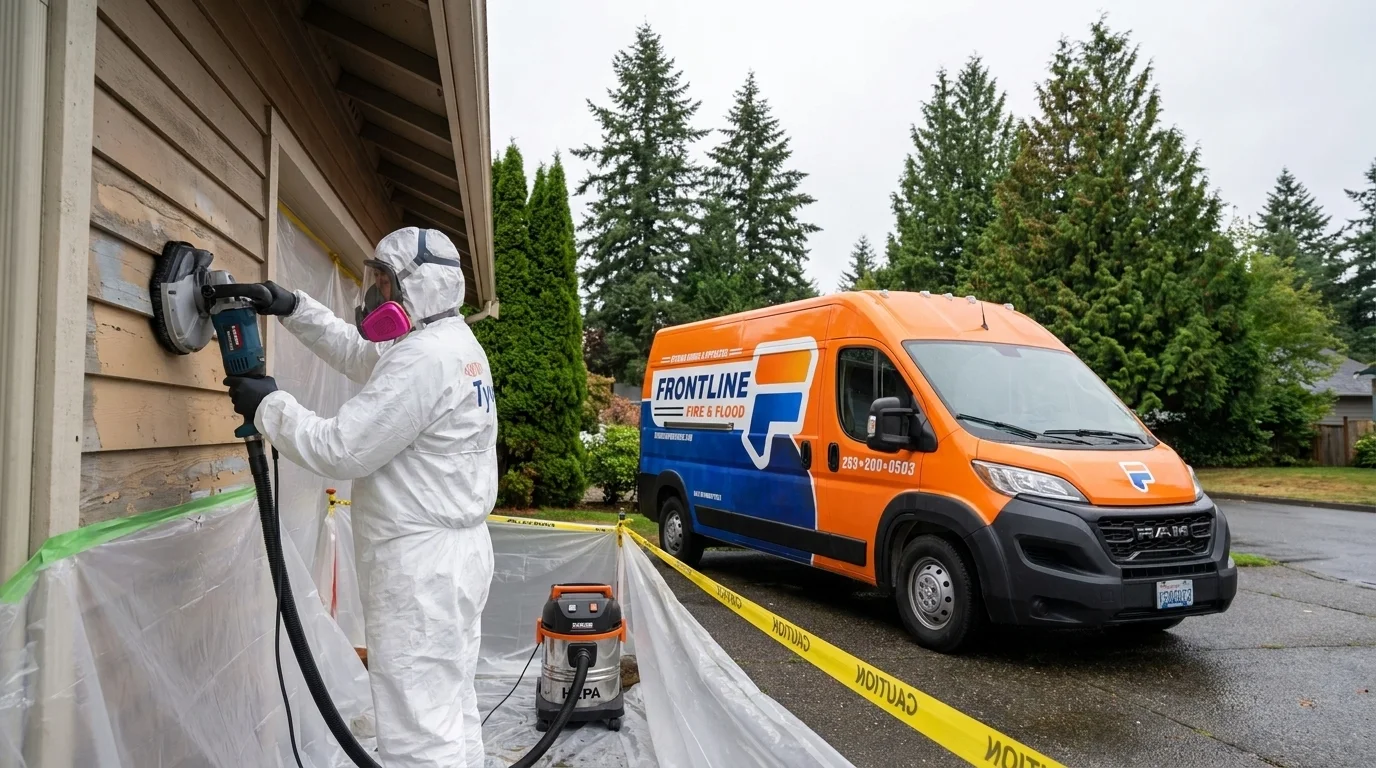
Abatement work starts with testing, either XRF surface readings or lab-analyzed paint chip samples, to confirm what’s present and where. From there the scope depends on condition and location: enclosure (sealing over intact lead paint with an approved barrier), encapsulation (a specialized coating), or full removal when the substrate is failing or being replaced. Work areas get sealed in plastic sheeting, HVAC systems are isolated, and HEPA-filtered negative air equipment keeps dust from migrating into the rest of the house while crews work under EPA RRP lead-safe practices. A single room, like a nursery with an old painted closet, can run a day or two. A whole-house job with multiple rooms, exterior trim, and a garage is a longer timeline with sequenced containment.
Our process
- Lead testing and sampling - XRF readings or lab-tested paint chips identify which surfaces contain lead and at what concentration, so the scope is based on data, not assumption.
- Containment setup - plastic sheeting, tape, and negative air machines isolate the work zone from living space and seal HVAC returns so dust doesn’t travel through the ductwork.
- Abatement work - depending on the surface and condition, this means wet-scraping and HEPA-vacuuming, chemical stripping, encapsulation coating, or removal and disposal of the painted component entirely.
- Specialized cleaning - HEPA vacuuming of every surface in the containment zone, followed by wet-wiping in a specific sequence, because standard cleaning methods can spread lead dust instead of removing it.
- Clearance testing - dust wipe samples are collected and sent to a lab to confirm the space is below EPA clearance levels before containment comes down and the area is cleared for normal use.
What separates a good lead paint response from a bad one
The most common failure point is containment that looks right but isn’t sealed well enough at edges, door gaps, or HVAC penetrations, which lets fine dust travel into rooms that were never supposed to be part of the job. Another is skipping wet methods, dry sanding or dry scraping lead paint generates airborne dust at levels that standard cleaning can’t catch up with afterward. A less experienced crew may also treat clearance testing as optional rather than the final checkpoint it’s meant to be: if the wipe samples come back high, the area isn’t actually safe to reoccupy, regardless of how clean it looks.
Good practice means disposal manifests for lead waste, documented RRP work practices on file, and clearance test results given to the homeowner in writing, not just a verbal “it’s fine.” When a project is tied to a renovation permit, inspectors and lenders sometimes want to see that documentation before signing off on the next phase of work.
What does Lead Paint Abatement cost?
Costs vary by the number of surfaces involved, whether removal or encapsulation is appropriate, and how much containment the space requires. These are typical industry ranges, not a quote: every property is different, and Frontline Fire & Flood provides a written scope of work with the testing results before any abatement work begins. Homeowners insurance typically does not cover routine lead paint abatement unless the lead hazard resulted from a covered event, such as fire or water damage disturbing painted surfaces, so most of this work is handled outside a claim.
| Scenario | Typical range |
|---|---|
| Single window or door unit | $400 - $900 |
| One room (walls, trim, one window) | $1,500 - $4,000 |
| Exterior trim and siding, single elevation | $2,500 - $6,000 |
| Whole-house interior abatement | $8,000 - $20,000+ |
| Lab testing and clearance sampling only | $300 - $800 |
Seasonal & regional considerations
Western Washington’s wet winters push a lot of exterior paint work into the drier months, since encapsulation coatings and sealants need stable, dry conditions to cure properly. Interior work isn’t weather-dependent in the same way, but older Lakewood-area homes with single-pane wood windows tend to generate the most friction-related dust (from windows sticking and scraping in their frames) during seasonal temperature swings, which is often when homeowners first notice chipping paint and decide to get it tested.
Service area
Frontline Fire & Flood handles lead paint testing and abatement for homes and rental properties throughout Lakewood and the surrounding South Puget Sound communities. Crews are licensed under WA contractor license #CCFRONTFF761CB and operate under EPA Lead-Safe Certified work practices on every project.
If you’ve got chipping or peeling paint in a pre-1978 home, or a renovation that’s about to disturb a painted surface, get it tested before any sanding or demo starts. Request a lead paint inspection and written abatement scope by calling (253) 200-0503.
Frequently Asked Questions
Does homeowners insurance cover lead paint abatement?
How do I know if my house has lead paint?
What's the difference between encapsulation and full removal?
How long does a lead paint abatement project take?
Can I stay in my home during lead paint abatement?
What happens if clearance testing fails after abatement?
Looking for the best lead paint abatement company in Lakewood?
Frontline Fire & Flood provides licensed and insured lead paint abatement in Lakewood, WA and the surrounding area, and has served local property owners since 2014. Customers rate us 4.9 out of 5 stars across 137 Google reviews. We answer calls 24/7 — call (253) 200-0503 for immediate help.
Need Lead Paint Abatement now?
We respond 24/7 across Lakewood and surrounding WA cities.