
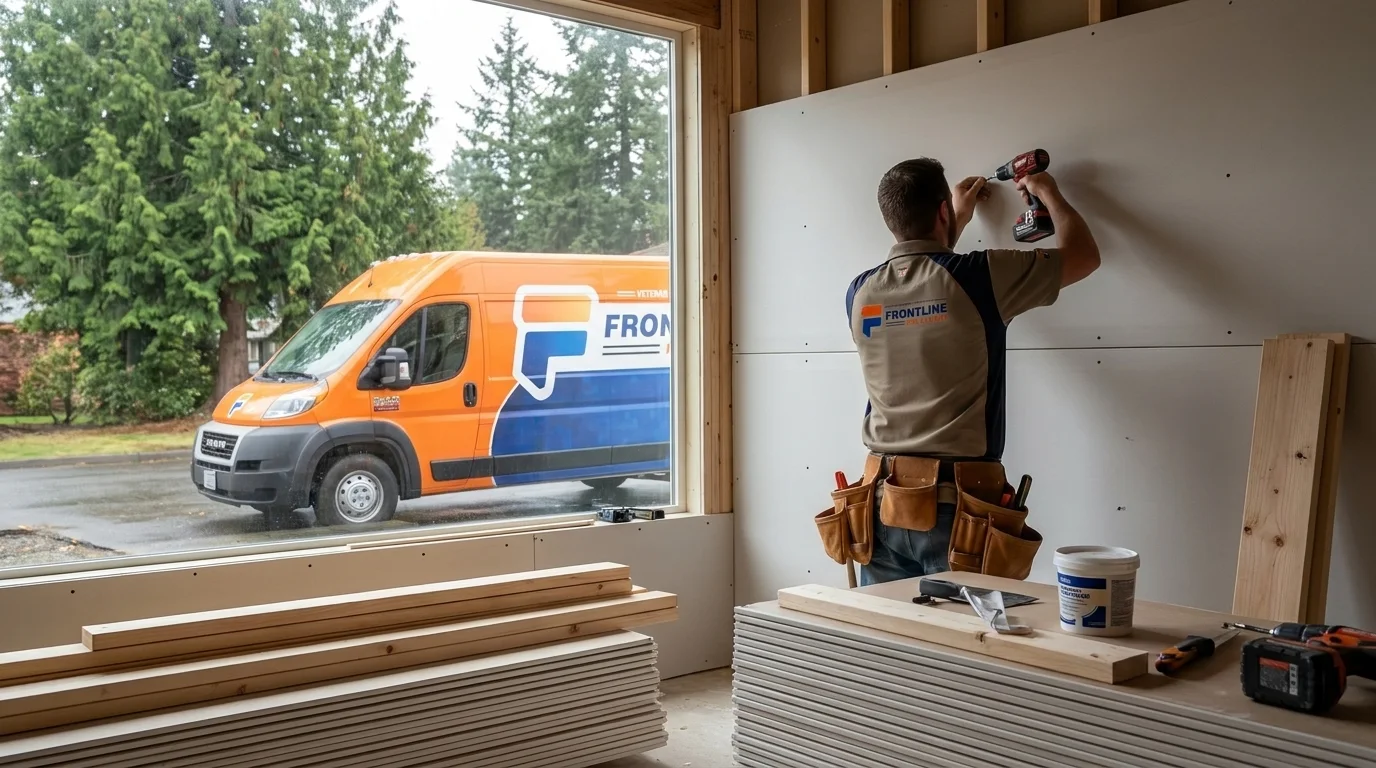
Renovations, Remodels and General Contracting in Lakewood
24/7 renovations, remodels and general contracting in Lakewood and surrounding areas. IICRC-certified, insurance billing accepted. Call (253) 200-0503.
A patched section of drywall that doesn’t match the rest of the wall. A bathroom subfloor that got replaced after a leak but the vanity still wobbles because nobody re-leveled it. A kitchen that passed demo and cleanup but now sits half-finished because the contractor who handled the water extraction wasn’t licensed to do the rebuild. This is the gap between remediation and a finished, livable space, and it’s where a lot of homeowners get stuck, whether the project started with a claim or just started with wanting a new kitchen.
What renovations, remodels and general contracting actually involves
This covers two overlapping kinds of work: standalone remodels (kitchens, bathrooms, additions, whole-room updates) and post-damage rebuilds, the reconstruction phase that follows water extraction, fire cleanup, or mold remediation once the affected materials are out and the space is ready to be rebuilt. Both require the same core disciplines: accurate scoping, permit compliance, licensed trades for electrical and plumbing rough-in, and finish work that actually matches the rest of the house instead of looking like a patch.
Timelines vary a lot by scope. A cosmetic bathroom refresh might run two to three weeks. A kitchen remodel with new cabinetry, electrical, and plumbing typically runs four to eight weeks depending on material lead times. A post-fire or post-water rebuild of a single room, once remediation is complete, usually runs somewhere in that same range, though structural repairs (subfloor, framing, load-bearing elements) extend it.
Our process
- Scope of work. We document the space, measure what’s damaged or what’s changing, and write a detailed scope, materials, labor, and sequencing, so there’s a clear reference point before anyone picks up a tool.
- Permits and plan review. Structural changes, electrical panel work, and plumbing relocations generally require a permit from the local building department. We pull what’s required and schedule around inspection windows rather than skipping steps that cause problems at resale or insurance renewal.
- Framing and rough-in. Any structural repair, new wall, or relocated fixture happens here, along with electrical and plumbing rough-in. This is also where post-damage rebuilds reconnect with the remediation work, insulation, vapor barriers, and subfloor need to be addressed before anything gets closed up.
- Rough-in inspection. The local inspector signs off on framing, electrical, and plumbing before drywall goes up. Skipping or rushing this step is one of the most common ways a remodel gets flagged later.
- Finish work and final walkthrough. Drywall, paint, flooring, cabinetry, fixtures, and trim. We do a final inspection pass before calling the project complete, checking for level, plumb, and finish consistency with the surrounding space.
What separates a good renovation or rebuild from a bad one
The most common failure point is a contractor who treats finish work as cosmetic when it’s actually covering unresolved structural or moisture issues. Drywall installed over a subfloor that wasn’t fully dried, or paint applied over a wall that still has elevated moisture readings, looks fine for a few months and then doesn’t. A good rebuild checks moisture content before closing up any wall or floor cavity that was part of a water or fire loss.
The second common issue is permit shortcuts. Unpermitted electrical or plumbing work can surface during a home sale, an insurance claim, or a future repair, and it becomes the homeowner’s problem to resolve, not the contractor’s. Insurance adjusters reviewing a post-damage rebuild will also look for whether the scope matches what was actually damaged and whether materials and labor are itemized clearly enough to reconcile against the claim.
Material matching is the third place corners get cut. Flooring, cabinetry, and trim profiles change over time, and a rebuild that doesn’t account for discontinued materials ends up with a visibly mismatched patch instead of a seamless repair.
What does renovation and reconstruction work cost?
Costs depend heavily on scope, material selections, and whether the project is a standalone remodel or a post-damage rebuild tied to an insurance claim. These are typical industry ranges, not a quote, every project gets a written scope of work from Frontline Fire & Flood before any work begins, so you know what’s included and why.
| Scenario | Typical range |
|---|---|
| Single-room post-damage rebuild (drywall, paint, flooring) | $3,500 - $12,000 |
| Bathroom remodel, mid-range finishes | $8,000 - $20,000 |
| Kitchen remodel, mid-range finishes | $20,000 - $55,000 |
| Structural repair (framing, subfloor) plus finish work | $10,000 - $30,000 |
| Whole-floor reconstruction after fire or water loss | $40,000 - $100,000+ |
Homeowners insurance typically covers reconstruction costs tied to a covered peril, like fire or a sudden pipe failure, but it generally does not cover voluntary upgrades or remodels unrelated to a claim; betterment costs beyond the original materials are usually the homeowner’s responsibility.
Seasonal & regional considerations
In the South Sound, exterior-facing work (roofing tie-ins, siding, window replacement) is easier to schedule outside the wet winter months, since extended rain delays can push back framing and inspection timing. Local building departments also tend to see a backlog of permit requests after major storm events, when a higher volume of damage-related rebuilds are filed at once, so scheduling early matters more than people expect.
Service area
Frontline Fire & Flood handles renovations, remodels, and reconstruction work for homeowners in Lakewood and throughout the surrounding South Sound area, including Tacoma, Puyallup, and JBLM-area communities.
If you’re staring at a space that’s demoed, patched, or just outdated and need a licensed crew to take it from scope to finish, get a reconstruction scope of work from Frontline Fire & Flood and find out what the project actually involves before committing to it.
Frequently Asked Questions
Does homeowners insurance cover reconstruction after fire or water damage?
Do I need a permit for a kitchen or bathroom remodel?
What's the difference between a cosmetic repair and a full reconstruction after fire or water damage?
Can you match existing flooring, cabinetry, or trim after a partial repair?
How long does a typical kitchen or bathroom remodel take?
Do you handle the rebuild if another company did the water extraction or fire cleanup?
Looking for the best general-contracting company in Lakewood?
Frontline Fire & Flood provides licensed and insured general-contracting in Lakewood, WA and the surrounding area, and has served local property owners since 2014. Customers rate us 4.9 out of 5 stars across 137 Google reviews. We answer calls 24/7 — call (253) 200-0503 for immediate help.
Need general-contracting now?
We respond 24/7 across Lakewood and surrounding WA cities.
Related Coverage
- Our Restoration Services
- Contact Frontline Fire & Flood
- Restoration Services in Anderson Island
- Restoration Services in Auburn
- Restoration Services in Bonney Lake
- Restoration Services in Bremerton
- Restoration Services in Burien
- Restoration Services in Centralia
- Restoration Services in DuPont
- Restoration Services in Federal Way
- Restoration Services in Fife
- Restoration Services in Fircrest