
TL;DR: In Tacoma, WA, storm damage restoration typically costs between $300 for a single emergency tarp and $50,000 or more for a full structural rebuild after a tree damages a roof. Most residential storm claims, covering tarping, water extraction, and repair together, land somewhere between $2,000 and $15,000. The final number depends mostly on how much water got into the structure before it was tarped and how many rooms were affected.
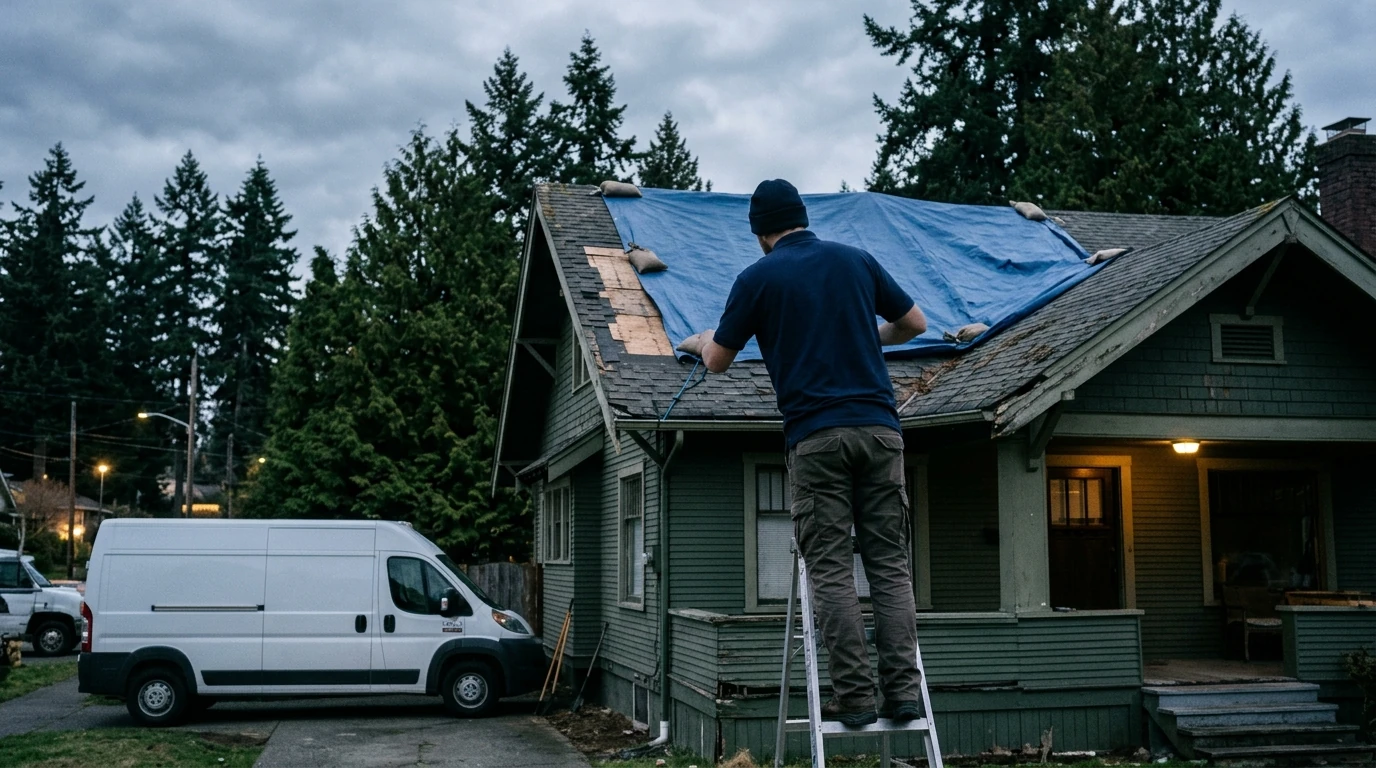
If a windstorm off Commencement Bay just tore shingles loose over your roof near the Stadium District, or a fir came down across the roofline out toward Point Defiance during this fall’s storm season, you’re probably holding two different bills in your head at once: what it costs to stop the damage from getting worse today, and what it costs to actually repair it. Those are two separate jobs with two separate price tags, and knowing which is which makes the conversation with your insurance adjuster a lot easier.
How Much Does Storm Damage Restoration Cost in Tacoma, WA?
Storm damage restoration in Tacoma generally falls into five cost tiers, running from a few hundred dollars for emergency protection to tens of thousands for a full structural rebuild, depending on how much of the home was exposed and for how long.
The gap between the low end and the high end is almost always water. A roof that gets tarped within a few hours after a windstorm might only need drywall patching and shingle repair. The same roof, left open overnight in a Pacific Northwest rain, can mean soaked insulation, saturated subfloor, and a mold risk that turns a repair job into a reconstruction job.
| Scenario | Typical Cost Range |
|---|---|
| Emergency tarp or board-up (per opening) | $300 - $1,500 |
| Water extraction and structural drying (per affected room) | $1,500 - $4,500 |
| Debris and fallen tree removal (coordinated separately from restoration) | $500 - $3,000+ |
| Wind-damaged roof or siding repair | $1,000 - $10,000 |
| Major structural rebuild (tree through roof, lost roof section) | $10,000 - $50,000+ |
| Mold remediation if drying is delayed | $1,500 - $6,000 |
These are typical industry ranges, not a quote. Every storm loss is different, and a written scope should always follow an in-person assessment before any work begins. For a deeper breakdown of drying and extraction pricing specifically, see our water damage restoration cost guide for Washington.
What Factors Change the Price?
The biggest cost driver is response time. The longer water sits in wood, insulation, or drywall, the more material has to come out instead of simply drying in place.
A few other things move the number:
- How the water entered. Rain coming through a fresh roof opening usually starts as Category 1 (clean) water under the ANSI/IICRC S500 standard, but it degrades quickly as it sits and picks up contaminants from insulation and building materials.
- Square footage and material type. Hardwood floors, plaster walls, and concrete take longer and cost more to dry than standard drywall and carpet, since they require slower, more intensive drying methods.
- Whether the structure needs a permit. Roof sheathing replacement, load-bearing repairs, and larger rebuilds typically require a Pierce County or City of Tacoma permit, which adds time and inspection cost to the project.
- How many trades are involved. A job that needs a tree service, a roofer, and a restoration crew coordinated together costs more in project management than a single-trade repair.
If wind tore off siding or shingles without any interior water intrusion, our storm and wind damage restoration guide walks through what that narrower repair scope usually looks like.
Will Homeowners Insurance Cover Storm Damage in Washington?
Most Washington homeowners policies cover sudden, storm-caused damage, like wind tearing off shingles or a tree falling on a covered structure, but coverage depends on the specific peril and your policy’s terms.
Wind and falling objects are typically listed as covered perils on a standard policy. If a tree comes down on your house, the cost to repair the structure is usually covered, and many policies include some debris removal coverage, though often with a dollar sublimit, so it’s worth checking your declarations page. What’s usually NOT covered under a standard homeowners policy is flood, meaning rising groundwater, overflowing storm drains, or surface water running into the home from outside. That requires a separate flood policy through the National Flood Insurance Program or a private flood carrier. For general guidance on which disasters a standard policy actually covers, the Insurance Information Institute’s overview is a useful plain-English reference, and Washington residents can also check coverage questions directly with the Washington Office of the Insurance Commissioner.
Homeowners also have a duty to mitigate further damage once a loss happens, meaning getting a tarp up and water out promptly isn’t just good sense, it protects the claim itself. Photograph everything before cleanup starts and keep every receipt.
What Happens During a Storm Damage Restoration Job?
A storm restoration job runs in a set sequence, and skipping a step usually costs more money later, not less.
- Emergency tarping or board-up. The first priority is stopping additional water and weather from entering through a damaged roof, window, or wall opening.
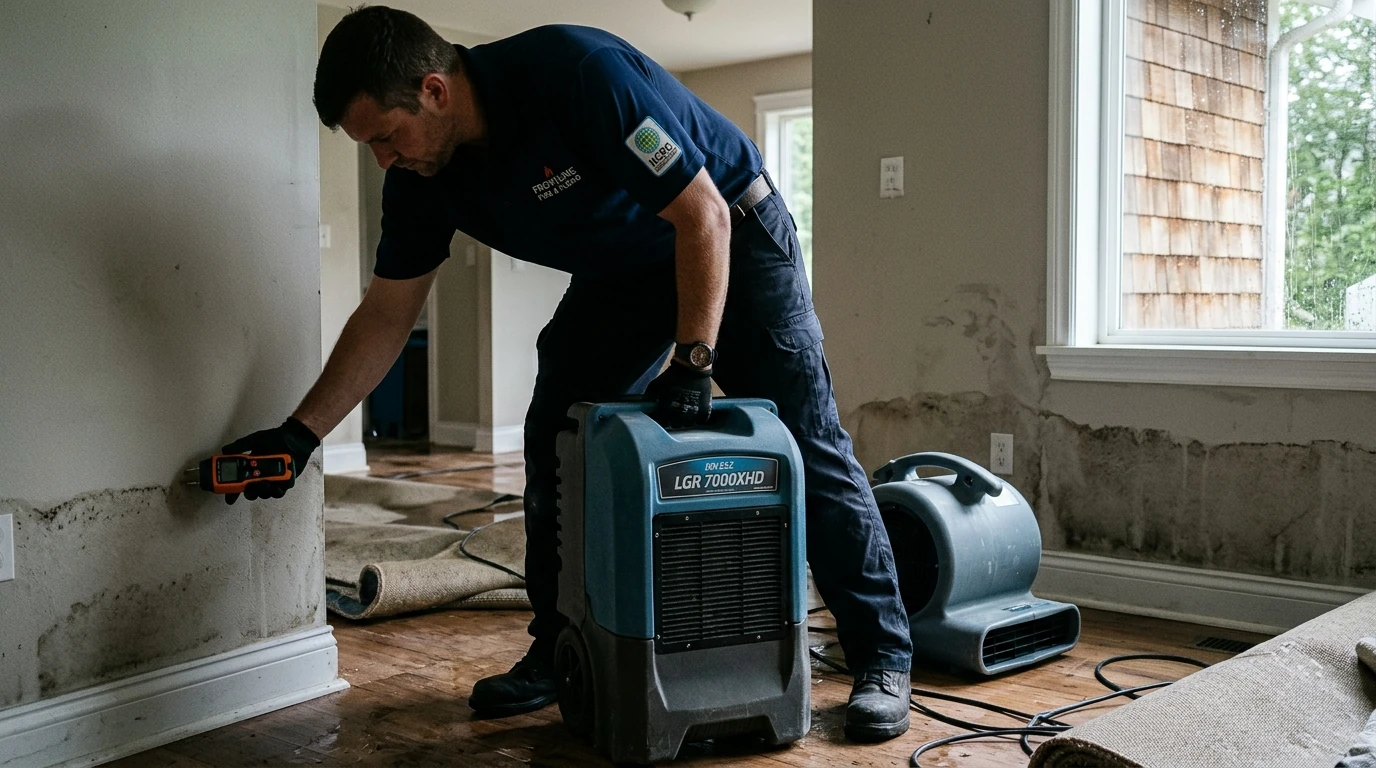
- Water extraction and structural drying. Standing water is removed and the structure is dried to the ANSI/IICRC S500 standard using air movers and dehumidifiers, with moisture readings tracked until materials return to a dry baseline.
- Debris and tree coordination. If a tree is involved, removal is typically coordinated with an arborist or tree service separately from the restoration scope.
- Structural assessment and repair scope. Once the structure is dry, a written repair scope is built, covering drywall, framing, roofing, or siding as needed.
- Insurance documentation. Photos, moisture logs, and the written scope are compiled to support the claim from start to finish.
When Should You Call a Restoration Company Instead of a Tree Service?
Call a restoration company first whenever water has entered the home, even if a fallen tree is the obvious cause, because the water clock starts running the moment the roof or wall opens, while tree removal can usually wait a few hours without making things worse.
If a tree came down in the yard with no roof contact and no interior damage, a tree service or arborist is the right first call. If the tree hit the house, or wind opened the roof even without a tree involved, the restoration side needs to start immediately with tarping and drying while tree removal is scheduled around it. If there’s a downed power line or exposed wiring anywhere near the damage, call 911 or the utility company before anyone approaches the structure. Frontline Fire & Flood coordinates the restoration side of storm claims directly with Tacoma homeowners and their insurance adjusters, including the tarping, drying, and documentation steps above.
If you’re facing storm damage right now, Call Frontline Fire & Flood at (253) 200-0503 to schedule a damage assessment and get the insurance documentation started the right way.
About Frontline Fire & Flood
Frontline Fire & Flood is an IICRC Certified Firm serving Tacoma and the greater South Puget Sound since 2014 (license CCFRONTFF761CB). Its technicians hold IICRC credentials in water restoration, structural drying, and fire and smoke restoration, and the company operates a 24/7 emergency line for storm, water, fire, and mold calls across Lakewood, Tacoma, Puyallup, and the surrounding service area.